Commercial Plumbing Installation for Hawaii Businesses: What to Know
@brooksbrxh012
October 14, 2026 · 17 min read
Commercial plumbing installation is one of those building decisions that stays mostly invisible until something goes wrong. When it is planned well, tenants and staff barely notice it. Restrooms work. Water heaters keep up. Drains clear properly. Fixtures hold up under daily use. When it is planned poorly, the problems show up fast, and they tend to be expensive, disruptive, and hard to hide from customers.
For Hawaii businesses, the first thing to understand is straightforward and important: plumbing is a licensed profession in the state. A person may not act or hold themselves out as a plumber without a license, and plumbing work generally must be performed by a licensed journey worker plumber or master plumber. Apprentices and helpers can be involved, but only under supervision. That matters on every project, especially commercial plumbing installation, where the scope is broader and the consequences of mistakes spread across an entire business operation.
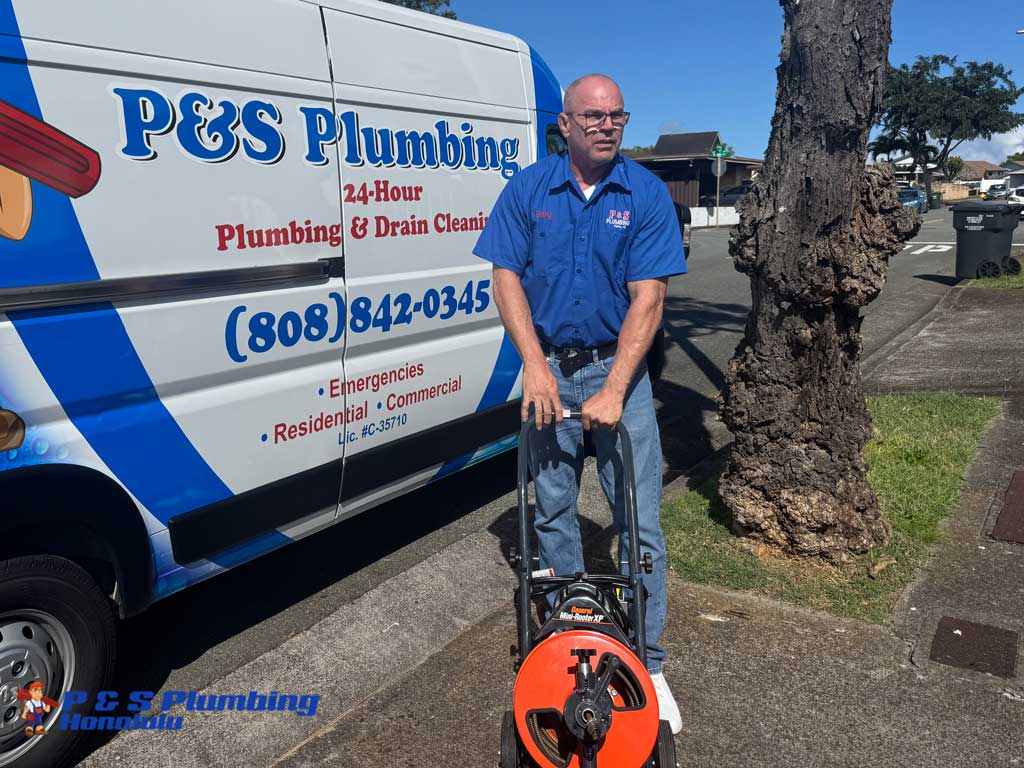

That legal framework should shape every early decision, from vendor selection to scheduling. If you are planning a restaurant build-out, a retail renovation, an office retrofit, or a larger facility improvement, commercial plumbing is not something to treat as a side trade that gets sorted out late in https://shaneuwse736.meridiannest.com/posts/plumber-near-me-why-state-licensing-should-be-on-your-checklist-2 the job. It affects occupancy, operations, maintenance planning, and your risk exposure if the work is not handled correctly.
Why commercial jobs need a different mindset
A commercial system does not just serve one household routine. It supports many users, repeated use, and often long operating hours. That changes the stakes.
A small installation issue in a home may inconvenience a family. The same kind of issue in a business can close a restroom, interrupt service, frustrate customers, or force employees into workarounds that are not sustainable. If your business depends on hot water, sanitary drainage, or reliable fixture performance, then the plumbing system is part of your revenue chain whether you think of it that way or not.
This is also where owners can get tripped up by language. People often search for a plumber near me when they are in a hurry, which makes sense when a leak is active or a restroom is down. But commercial plumbing installation should not be approached like a generic service call. It needs the attention of a qualified commercial plumber who understands the difference between simple repair work and a larger installed system that has to perform over time.
In West Hawaii, including Kailua-Kona, business listings commonly show companies offering residential and commercial plumbing, drain cleaning, sewer line repair, water heater repair and installation, leak detection, and solar water heating services. That tells you the market includes firms with overlapping capabilities. It does not mean every provider is equally suited for every commercial project. A plumber Kona business owners call for a routine repair might not always be the right fit for a larger installation unless that company is staffed and licensed appropriately for the work involved.
The licensing question should come first, not last
Owners sometimes focus first on price, availability, or whether a company has handled a neighboring property. Those factors matter, but they come after the threshold issue: who is legally authorized to do the work.
In Hawaii, contractor oversight and state licensing are tied together. The state makes clear that plumbing contractors must employ licensed plumbers to perform the actual work. That is more than a formality. It is a practical quality control measure. A commercial installation involves coordination, judgment, and code knowledge. If a business owner skips that verification step, the risk is not abstract. It can affect workmanship, accountability, and whether the project proceeds properly.
There is another point here that seasoned property managers learn early. A commercial job rarely stays exactly as first described. Once walls are opened or fixtures are selected, scope can shift. Drain routing may need adjustment. Existing equipment may not match assumptions. A system that looked serviceable may need more attention than expected. On projects like that, you want a team that can respond within the rules, not one improvising around them.
The continuing competency requirement matters too. Hawaii plumber license renewals currently require continuing competency in the 2021 Uniform Plumbing Code for the renewal cycle ending June 30, 2027. For business owners, that means licensed plumbers are not only authorized to work, they are also required to stay current in the code framework that governs the trade. That is not a guarantee that every project goes perfectly, but it is a meaningful baseline when you are choosing who should handle installation work in a commercial setting.
Commercial installation is not the same as emergency repair
A lot of business owners first meet a plumber during an urgent problem. A leak starts. A drain backs up. Hot water drops out. At that moment, searching for an emergency plumber is a sensible move. But emergency response and commercial plumbing installation are different categories of work, and the difference matters.
Emergency work is about restoring function and preventing damage. Installation work is about creating a system that will support the building’s actual use pattern. One is triage. The other is infrastructure.
Hawaii law includes a narrow exception for limited emergency plumbing repair work in a person’s principal residence. That exception does not apply to sewer lines, drains, gas lines, or certain fixtures such as heaters and water closets. It also speaks to a principal residence, not a business setting. For commercial owners, that should reinforce a simple takeaway: do not assume there is informal room to handle plumbing work outside the licensed framework just because the situation feels urgent. Commercial jobs need licensed professionals, and the more serious the issue, the more important that becomes.
I have seen owners blur this line in planning conversations. They start with a temporary fix mindset, then try to stretch that approach into a broader installation decision. That usually creates more cost later. A patched issue can buy time. It does not replace proper design, execution, or accountability on a commercial system.
Scope creep starts where owners underestimate the plumbing
The phrase “just a few fixtures” has led many projects into trouble. Plumbing scope tends to expand once real use is considered.
A business might begin by asking for a break room sink, a restroom refresh, and a water heater replacement. Then the conversation widens. Does the current layout support the intended staff count? Will the existing drainage arrangement handle the planned use? Is the water heater sized appropriately for the way the business actually operates? If there are recurring drainage issues, does the job need more than basic drain cleaning before new fixtures go in? If an older line is already problematic, is a bigger conversation about sewer line repair being postponed rather than solved?
Those are not alarmist questions. They are exactly the kind of practical questions a commercial plumber should raise before installation begins.
That does not mean every project becomes large. Some are still relatively contained. But the owner is best served when the initial review looks honestly at the system, not just the visible fixture list. A new sink installed onto a struggling drainage system may technically complete the scope and still leave the business dissatisfied two months later.
Water heating deserves more attention than it gets
Water heating is often treated as an equipment decision when it is really an operational one. Businesses tend to notice it only when supply falls short or the unit fails outright. By that point, the conversation is already expensive.
In Hawaii, local plumbing businesses commonly advertise both water heater repair and installation, along with solar water heater repair in some markets. That tells you two useful things. First, commercial owners often have choices beyond a one-size-fits-all approach. Second, repair history and installation planning are linked. If a business has recurring service calls for water heater repair, replacing the unit without asking why it has been struggling may not solve the core issue.
The same logic applies to solar water heater repair. If a property uses solar water heating and the system has been inconsistent, the installation conversation should not stop at “repair or replace.” The owner should understand how the hot water demand of the business lines up with the condition and capabilities of the current setup. Commercial use patterns matter. So does the difference between occasional interruptions and chronic underperformance.
An experienced plumber Kona business owners trust will usually spend more time asking about use than owners expect. How many people use the system? At what times? Are there sharp peaks? Has hot water availability changed over time? Those questions may feel basic, but they are often what separate a proper installation decision from a rushed equipment swap.
Drainage problems can undermine a new installation
One of the easiest mistakes on a commercial project is treating supply-side work and drainage-side work as separate stories. On paper, the owner may be focused on adding fixtures or updating restrooms. In practice, the health of the drainage system often decides whether the finished job performs well.
That is why drain cleaning and sewer line repair belong in early project conversations when there is any history of slow drains, backups, odors, or frequent service calls. A clean-looking fixture package will not compensate for an underlying drainage problem. If the business has had recurring stoppages, a new installation may simply expose the weakness faster because usage continues or increases.
I have watched owners react with surprise when a plumbing contractor spends more time discussing existing line conditions than discussing sink models or faucet finishes. But that is usually a sign of seriousness, not drift. Commercial plumbing works as a system. It fails as a system too.
This does not mean every install requires major corrective work. It means the possibility should be evaluated before finishes are set and schedules tighten. Once cabinetry, wall treatments, or tenant improvements are complete, revisiting avoidable drainage problems becomes much more painful.
Coordination matters more than most owners expect
Commercial plumbing installation rarely exists in a vacuum. Even where the project seems simple, the work usually intersects with broader building decisions. Hawaii wastewater guidance notes that some property wastewater projects may also require a licensed plumber and or electrician, depending on the scope of work. That point deserves attention because many project delays start in the handoff between trades rather than within a single trade.
If plumbing changes affect equipment, access, controls, or power-related components, those relationships need to be recognized early. The same applies when wastewater work expands beyond a narrow initial description. Owners do not need to master the technical details themselves, but they do need to understand that plumbing scope can trigger coordination requirements.
That is one reason experienced contractors ask more questions up front than owners sometimes like. It is easier to be patient in planning than to discover midway that another licensed trade now has to be brought in under time pressure.
What a smart business owner should clarify before work starts
The most productive preconstruction conversations are not about chasing the lowest number. They are about reducing ambiguity. If you want a commercial plumbing installation to go smoothly, get clear answers on a few basic points before materials are moving and walls are opening.
- Who will actually perform the plumbing work, and are they licensed as required in Hawaii?
- Is the project strictly installation, or is there reason to investigate drain cleaning, sewer line repair, or existing system condition first?
- Does the job involve water heating equipment, and if so, is the discussion addressing both installation and likely future service needs such as water heater repair or solar water heater repair?
- Could the plumbing scope overlap with wastewater or electrical work that requires additional licensed professionals?
- If the project is being framed as urgent, is everyone distinguishing clearly between emergency response and a complete, code-compliant installation?
That list may look simple, but it catches many of the misunderstandings that drive change orders, delays, and disappointment later.
Choosing the right commercial plumber in practice
Owners often ask some version of the same question: how do I know whether I am talking to the right company?
The first screen is licensing and lawful staffing, because that is nonnegotiable in Hawaii. After that, the useful distinction is between companies that merely offer commercial plumbing and those that are comfortable thinking through commercial consequences. There is a real difference.
A contractor focused on the commercial side will usually spend less time selling and more time clarifying. They will want to know how the building is used, what has been failing, whether drainage has been stable, what kind of hot water demand exists, and whether the job is part of a larger renovation. They are less likely to treat each symptom as unrelated.
This is where search terms can be misleading. Someone may type plumber near me and get a long list of options. Another owner may search commercial plumber or plumber Kona and still see a broad mix of providers. The right choice comes from matching the contractor’s legal qualifications and actual scope experience to the project, not from assuming every listing means the same thing.
A business owner should also pay attention to how the contractor talks about uncertainty. Good tradespeople do not pretend every unknown is already resolved. If there is a possibility that an installation plan may change once existing conditions are exposed, saying so early is a mark of professionalism. It helps the owner budget time, money, and expectations realistically.

When “small” projects stop being small
Many commercial plumbing jobs begin with a narrow business goal. Add one sink. Replace a heater. Rework a restroom. Improve one tenant space. Those are common and reasonable starting points. The issue is not that the goal is small. The issue is that plumbing ties into systems that may not stay small once examined.
A property with repeated clogs may need more than fixture replacement. A business planning a hot water upgrade may learn that service history points toward a broader equipment problem. A renovation may uncover wastewater-related needs that require additional licensed involvement. None of that means the project was misjudged. It means the owner is finally seeing the real scope instead of the visible symptom.
That is why the best commercial plumbing installation projects are not the ones with the fastest first estimate. They are the ones where someone takes the time to understand the building before promising a neat answer.
A final practical view for Hawaii businesses
For a Hawaii business owner, the essentials are clear even without getting deep into technical details. Commercial plumbing installation is licensed work. It should be performed by the licensed professionals the law requires. Emergency thinking should not be confused with installation planning. Existing drainage, sewer, and water heating conditions deserve honest review before new work goes in. Some wastewater-related work may involve other licensed trades depending on scope.
If you keep those principles in front of you, decision-making gets simpler. The project may still have surprises, because buildings often do. But you are far less likely to end up with the wrong crew, the wrong expectations, or a new installation sitting on top of old unresolved problems.
That is ultimately what businesses need from a commercial plumber, not just a completed job, but informed judgment. The visible fixtures matter. The hidden system matters more.
Name: P&S Plumbing Kona
Address: 73-5573 Kauhola St Bay #11, Kailua-Kona, HI 96740, United States
Phone: 808-325-3892
Website: https://www.psplumbinghawaii.com/
Email: [email protected]
Hours:
Sunday: Open 24 hours
Monday: Open 24 hours
Tuesday: Open 24 hours
Wednesday: Open 24 hours
Thursday: Open 24 hours
Friday: Open 24 hours
Saturday: Open 24 hours
Time zone: Hawaii-Aleutian Time
Open-location code / Plus code: MXQJ+P4 Kailua-Kona, Hawaii, USA
Map/listing URL: https://www.google.com/maps/search/?api=1&query=Google&query_place_id=ChIJwc_thcwNVHkRhwCIvILuP8w
Embed iframe:
Socials:
https://www.facebook.com/psplumbingkona/
https://x.com/PSPlumbingKona
https://soundcloud.com/p-s-plumbing-kona
https://www.youtube.com/@PSPlumbingKonaHawaii
P&S Plumbing Kona provides plumbing services from its Big Island headquarters on Kauhola Street in Kailua-Kona.
The official website lists Kona phone service at 808-325-3892 and also lists Hilo and Honolulu service contacts.
P&S Plumbing provides residential plumbing, commercial plumbing, drain and sewer service, water heater work, plumbing repairs, leak detection, fixture repair, kitchen plumbing, bathroom plumbing, and emergency plumbing support.
The official site lists the Big Island headquarters at 73-5573 Kauhola Street, Bay 11, Kailua Kona, HI 96740.
The company’s official site lists Hawaii State License Number CT-35710 and describes P&S Plumbing as licensed and insured.
Customers can contact P&S Plumbing Kona for drain cleaning, sewer-line concerns, water heater service, clogged toilets, fixture repairs, plumbing leak detection, pipe-lining needs, bathroom remodeling plumbing, kitchen plumbing, commercial plumbing, and urgent plumbing requests.
For plumbing service in Kailua-Kona and West Hawaii, call 808-325-3892 or visit https://www.psplumbinghawaii.com/
The public map listing uses plus code MXQJ+P4 Kailua-Kona, Hawaii, USA and can help customers find P&S Plumbing Kona near Kauhola Street.
Popular Questions About P&S Plumbing Kona
What does P&S Plumbing Kona provide?
P&S Plumbing Kona provides plumbing services for residential and commercial customers, including drain cleaning, sewer and drain service, water heater service, plumbing repairs, fixture repair and installation, leak detection, kitchen plumbing, bathroom plumbing, and 24-hour emergency plumbing.
Where is P&S Plumbing Kona located?
The official contact page lists the Kona location at 73-5573 Kauhola Street, Bay 11, Kailua Kona, HI 96740. The listing address is 73-5573 Kauhola St Bay #11, Kailua-Kona, HI 96740, United States.
What phone number should Kona customers call?
The official website lists Kona phone number 808-325-3892.
What is the email address for P&S Plumbing Kona?
The email address is [email protected].
What are P&S Plumbing Kona’s hours?
The listing hours show P&S Plumbing Kona as open 24 hours a day, seven days a week, Hawaii-Aleutian Time. The official website also references 24-hour emergency plumbing service.
Is P&S Plumbing licensed?
The official website lists Hawaii State License Number CT-35710. Customers can confirm license status directly with the relevant Hawaii licensing authority before hiring.
Does P&S Plumbing Kona offer emergency plumbing?
Yes. The official website references 24-hour emergency plumbing service and emergency services availability.
Does P&S Plumbing handle water heaters?
Yes. The official website lists water heater installation and repair, including tankless, solar, conventional water heaters, and boiler setup and repair.
What areas does P&S Plumbing serve from Kona?
The official service-area page lists Big Island / Kona communities including Kona, Holualoa, Kukio, Waikoloa Village, Kalaoa, Captain Cook, Kahaluu-Keauhou, Keauhou, Kainaliu, Waimea, Puako, and Kealakekua.
How do I contact P&S Plumbing Kona?
Call 808-325-3892 or visit https://www.psplumbinghawaii.com/. Social profiles: Facebook, X, SoundCloud, and YouTube.
Landmarks Near Kailua-Kona, HI
Kauhola Street: The street listed for P&S Plumbing Kona’s Big Island headquarters and a practical reference point for the Kailua-Kona location.
Queen Kaʻahumanu Highway: A major West Hawaii route connecting Kailua-Kona, Kona International Airport, Waikoloa, and nearby coastal communities.
Ellison Onizuka Kona International Airport: A major transportation landmark north of Kailua-Kona and near local service routes.
Kailua-Kona town: A central West Hawaii community served by local plumbing contractors.
Old Kona Airport State Recreation Area: A well-known Kailua-Kona landmark near residential and commercial areas.
Kailua Pier: A central waterfront landmark in Kailua-Kona and a common local reference point.
Aliʻi Drive: A major coastal route with homes, condos, restaurants, shops, and visitor properties.
Honokōhau Harbor: A marina and commercial harbor area near Kailua-Kona and local business routes.
Kaloko-Honokōhau National Historical Park: A major cultural and coastal landmark north of Kailua-Kona.
Keauhou: A South Kona community with homes, condos, resorts, and plumbing service needs.
Holualoa: An upland Kona community with residential properties and local businesses.
Waikoloa Village: A West Hawaii community listed on P&S Plumbing’s service-area page.
Waimea: A Big Island community listed on P&S Plumbing’s service-area page.
Kealakekua: A South Kona community listed on P&S Plumbing’s service-area page.
Captain Cook: A South Kona community listed within P&S Plumbing’s Big Island / Kona service-area references.
For residential plumbing, commercial plumbing, drain cleaning, sewer-line repair, water heater service, leak detection, fixture work, bathroom plumbing, kitchen plumbing, or 24-hour emergency plumbing near these Kailua-Kona and West Hawaii landmarks, contact P&S Plumbing Kona at 808-325-3892 or visit https://www.psplumbinghawaii.com/